
Syria: Farmers and the Euphrates
Publisher-hosted reporting about farmers, the river and conflict.
View original ↗From French shelling in Damascus to rural water crisis and wars.
← Choose another history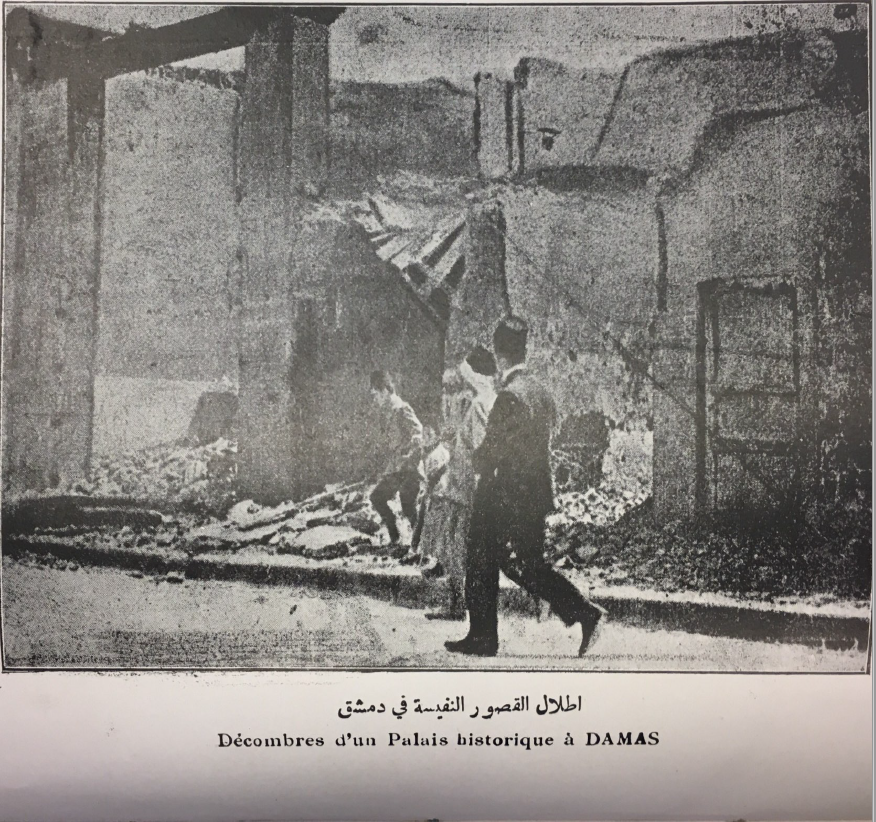 Archive image could not load; read the primary document linked beside this scene.
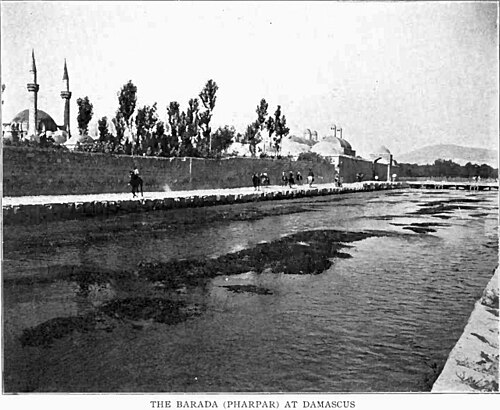
The Barada had already fed Damascus and the Ghouta through an intricate canal network before the early Muslim conquests. Under the Umayyads, rulers intervened in the inherited channels, but neighbourhoods, cultivators and landholders continued to defend their access. Accounts preserved by the twelfth-century historian Ibn ʿAsākir describe disputes over the Nahr Yazīd canal and a water-sharing arrangement associated with Caliph Hishām, using timed turns during shortage. Scholars distinguish the early events from the later texts that recount them. This is a history of law, hydraulic engineering and bargaining, not an image of an all-powerful caliph gifting water to passive subjects. The Orontes norias, later civic waterworks and today’s broken systems belong within that longer Syrian knowledge tradition.
Archival image unavailable. Open the institutional record ↗
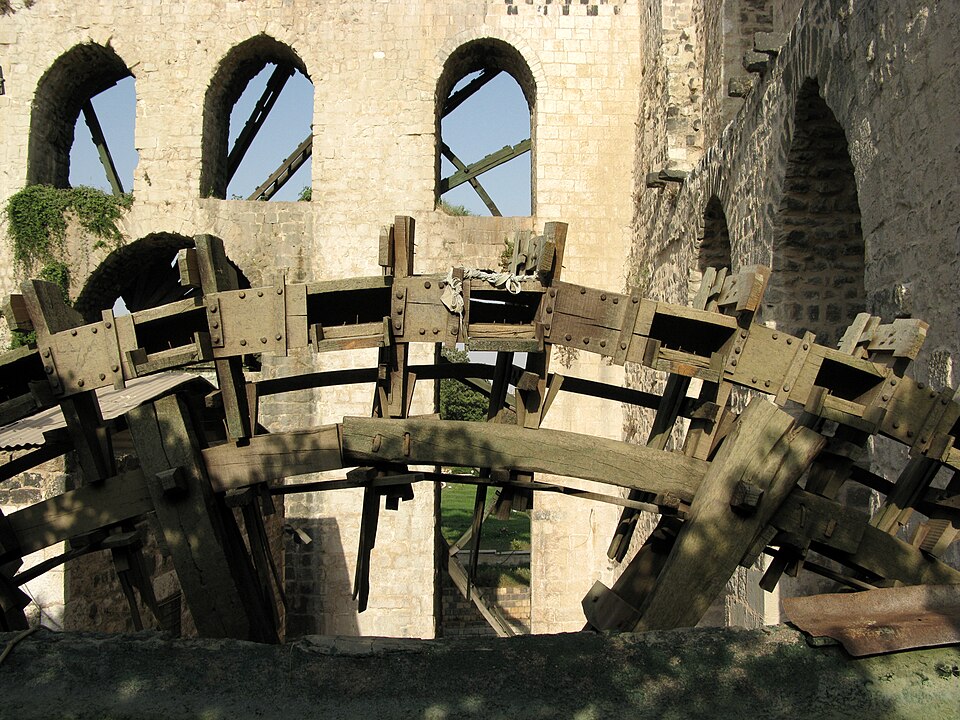
In Hama, the Orontes River turned great wooden norias that lifted water into elevated stone aqueducts serving gardens and public buildings. The al-Muhammadiyya noria bears an inscription dating it to 763 AH (1361 CE). It stands within a longer history of water-raising technologies refined across classical, Islamic and later periods. The wheel depended on carpentry, masonry, knowledge of river flow and continuous repair. This is the history of Syrian communities creating infrastructure—not a story beginning when French engineers arrived to survey the country.
Archival image unavailable. Open the institutional record ↗
For generations, Syrian communities irrigated fields and orchards through local canals, springs and waterwheels, including the norias of Hama. Water was already worked, governed and contested within Ottoman Syria.
UNESCO heritage nomination: Hama’s waterwheels. The 1925 French bombardment photograph belongs to the later Mandate scene.
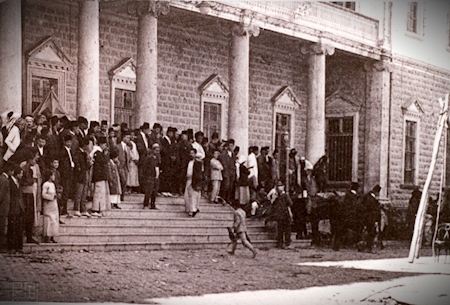
Inspect the source ↗After the Ottoman Empire’s collapse, Syrian political actors did not wait for Paris to design their future. The General Syrian Congress debated representation, provincial autonomy and an Arabic constitutional text for the Syrian Kingdom. In March 1920 it proclaimed independence. The French army invaded in July, interrupting this constitutional process and enforcing European decisions about Syria’s government. A surviving early Arabic draft—studied in 2026 from French diplomatic archives—makes the omission visible: Syrian state-making was a real political experiment, not an absence to be filled by the colonial Mandate.
 Archive image unavailable; follow its source below.
After France took control of Syria under a League of Nations mandate, people organised against foreign rule. In October 1925 French troops bombarded Damascus during the Great Syrian Revolt. French bombardment damaged shops, homes and whole neighbourhoods. The bombardment was an act of colonial military power, long before drought became a familiar explanation for Syria’s later wars.
Archive image could not load; read the primary document linked beside this scene.Photographs of Damascus after the French bombardment in October 1925 show wrecked streets and buildings. The people living there were already resisting an imposed Mandate; they had homes, markets and a working urban water system before France shelled the city. These photographs record what French colonial force destroyed. They cannot tell us the names or political choices of every person beneath the rubble, which is why the Syrian anti-colonial revolt belongs beside the military image.
Original record: French Mandate and 1925 bombardment: historic image and dossier
View the source ↗The French Mandate did not encounter empty or ahistorical land in northeastern Syria. Kurdish, Arab, Armenian and Syriac communities carried existing histories of pastoralism, farming, displacement and refuge. But the French administration treated the Jazira as a frontier to develop: new borders severed older economic routes, land registration recognised large holdings for selected tribal leaders, and colonial officials encouraged cultivation and settlement. Armenian survivors and other displaced groups actively built villages and livelihoods; they were not merely instruments of French policy. The great cotton boom and motorised irrigation expansion accelerated after the Mandate, enriching some landholders and traders while many tenants remained poor. The Ba’athist state would later take over and expand this unequal agrarian landscape. Colonial property-making, independent-state development and global market policy belong to the same history without becoming the same event.
Original policy, archival or research record. Inspect the source for its exact context.
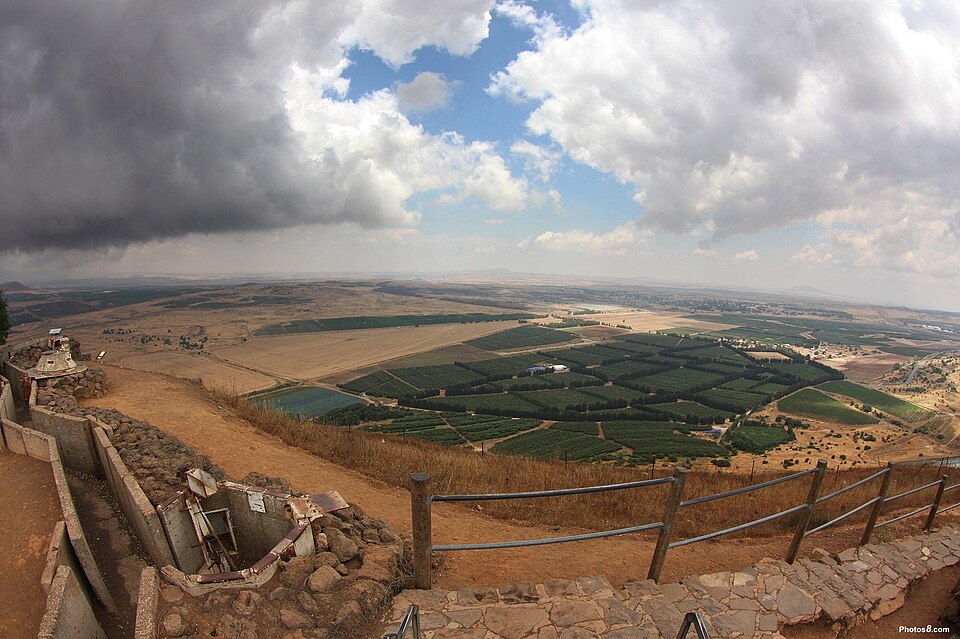
Read the record ↗Israel occupied the Syrian Golan Heights in 1967. The plateau’s springs and tributaries form part of the wider Jordan basin. Syrian residents and displaced families lived with the consequences of territorial control and lost access to homes and land.
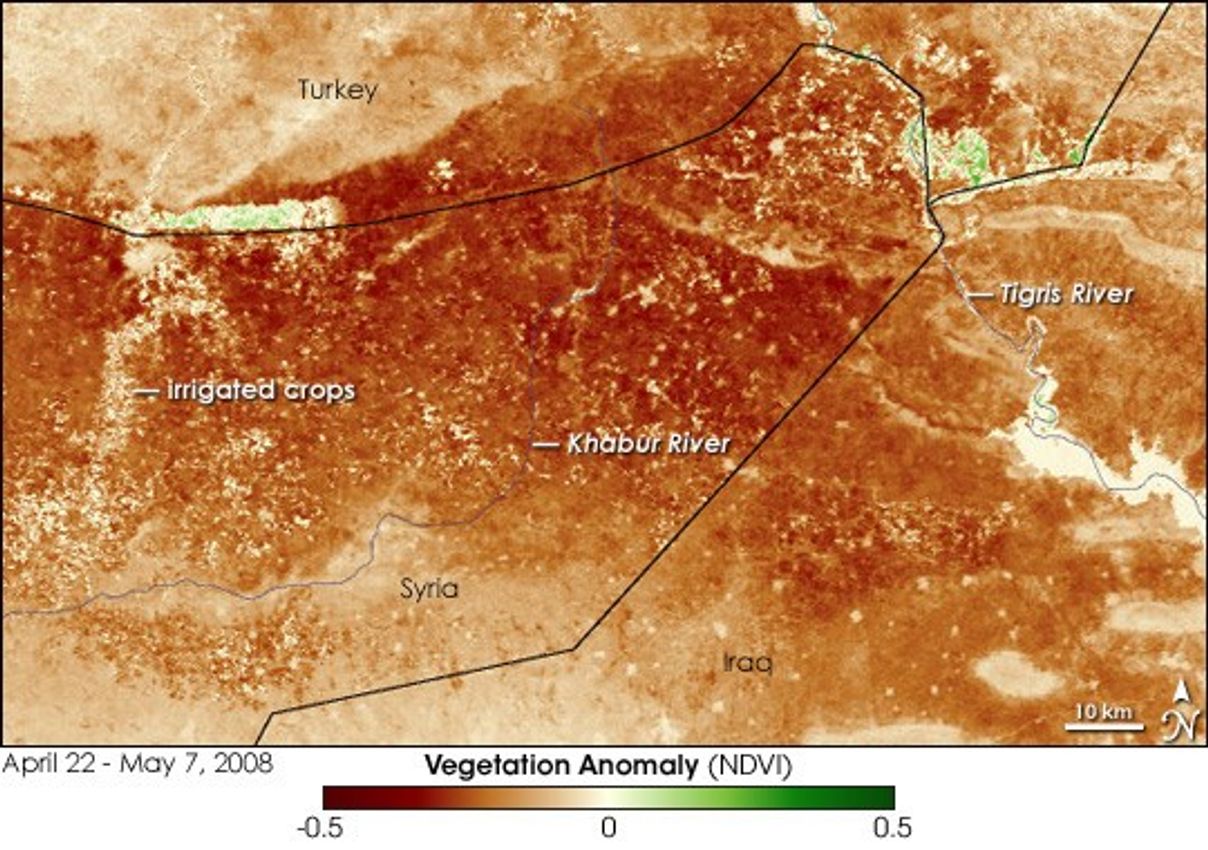
Northeastern Syria’s 2006–10 drought was severe, but vulnerability had been produced politically over generations. Under the French Mandate, land registration in the Jazira concentrated ownership among selected tribal elites, while colonial officials imagined the region as a productive frontier. From the late 1940s, cotton pumping and mechanised wheat farming expanded the commercial agrarian system. Under Hafez al-Assad, the Ba’athist state enlarged dams, irrigation and subsidised cotton and wheat to secure food production and rural support; intensive groundwater pumping outpaced replenishment. Under Bashar al-Assad, the 2005 “social market economy” and energy-subsidy reforms shifted costs and weakened protections for rural families. The IMF pressed for faster price, subsidy and private-sector reform; the World Bank advised the government, though Syria did not undergo a conventional Bank-financed structural adjustment programme. A colonial land settlement, an authoritarian national development model and neoliberal policy influence thus intersected long before the drought; they shaped vulnerability but do not make drought the sole cause of the 2011 uprising.
 Archive image unavailable; follow its source below.
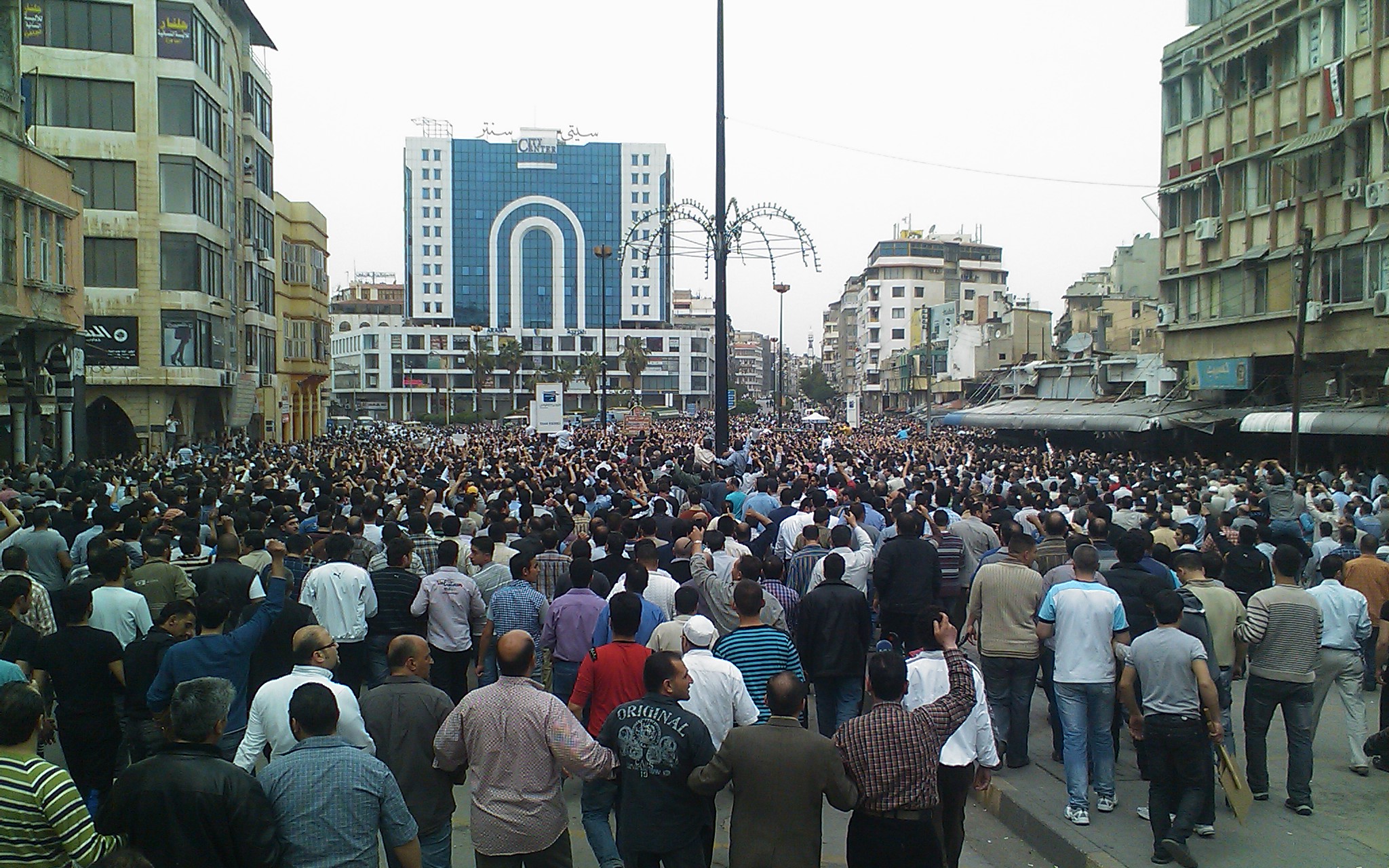
In 2011 Syrians protested against government rule and met violent repression. As the uprising became an armed war, foreign states intervened in very different ways: Turkey, Gulf countries and Western governments supported or armed opposition factions; Russia and Iran backed the Syrian government; ISIS seized cities and communities. None of those competing military projects was a substitute for the lives Syrians had built. The competing armies and armed groups destroyed or cut off farms, irrigation networks, pumps and electricity systems as they fought for territory.
 Archive image unavailable; follow its source below.
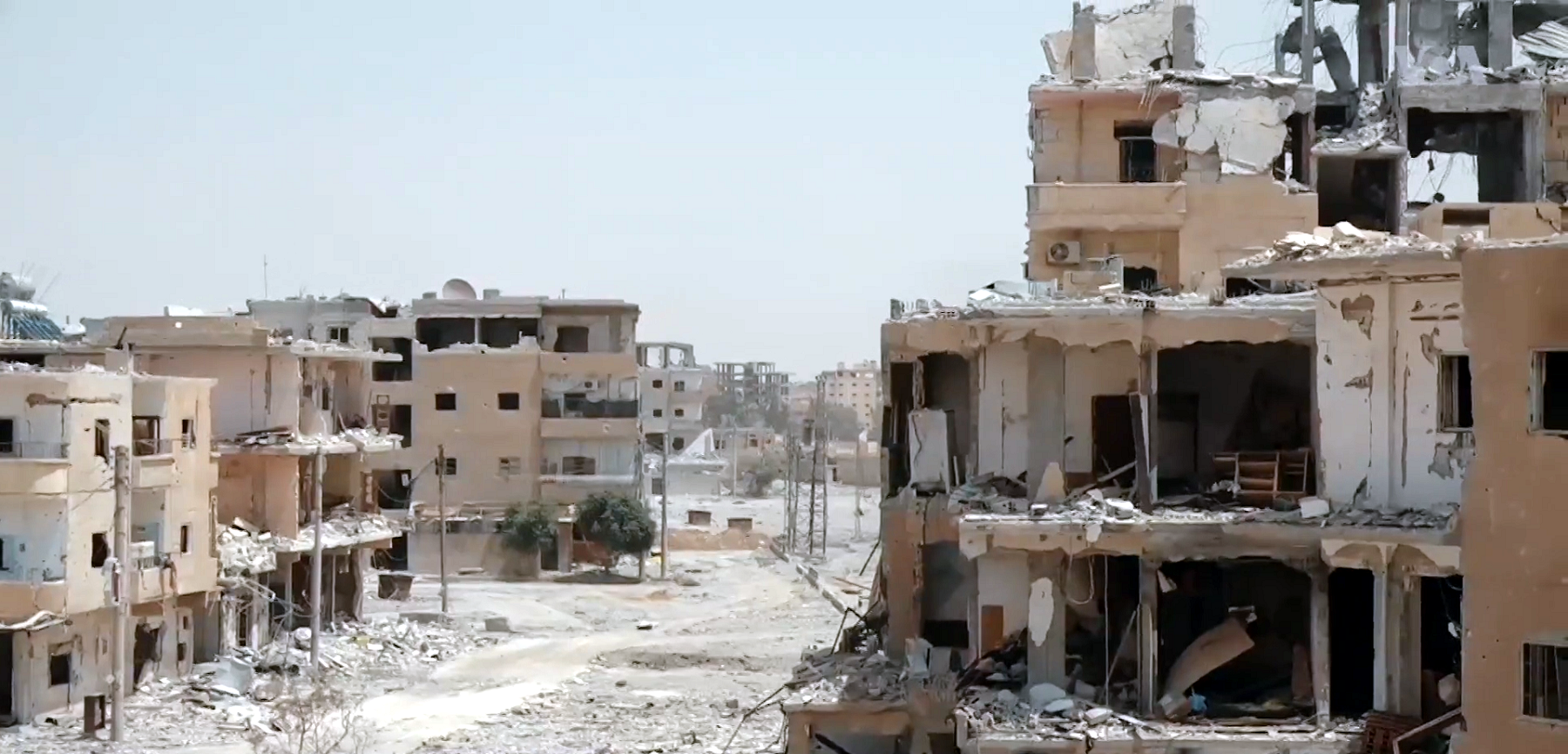
For years, ISIS had ruled Raqqa through executions, torture and fear. In 2017 US, British and French airstrikes and US artillery supported the military campaign to drive it out. The city was shattered. Amnesty International and Airwars investigated the damage and identified more than 1,600 civilians credibly reported killed in coalition attacks. Survivors described losing children, homes and entire families. The battle also left electricity and water infrastructure in ruins. Calling the operation a victory did not restore the city its residents had known.
 Archive image unavailable; follow its source below.
Rasha Badran and her family moved repeatedly between Raqqa neighbourhoods, fleeing ISIS rule and the advancing US-led coalition assault. In several coalition airstrikes, 39 members of her extended family died, including her one-year-old daughter Tulip. Rasha told Amnesty International: “I don’t understand why they bombed us. Didn’t the surveillance planes see that we were civilian families?” Her question confronts the military claim of precision: the civilians were not interchangeable with ISIS fighters. Amnesty’s original investigation preserves her own account of moving, hiding and burying her daughter.
Original record: Amnesty International: Rasha Badran and the families of Raqqa
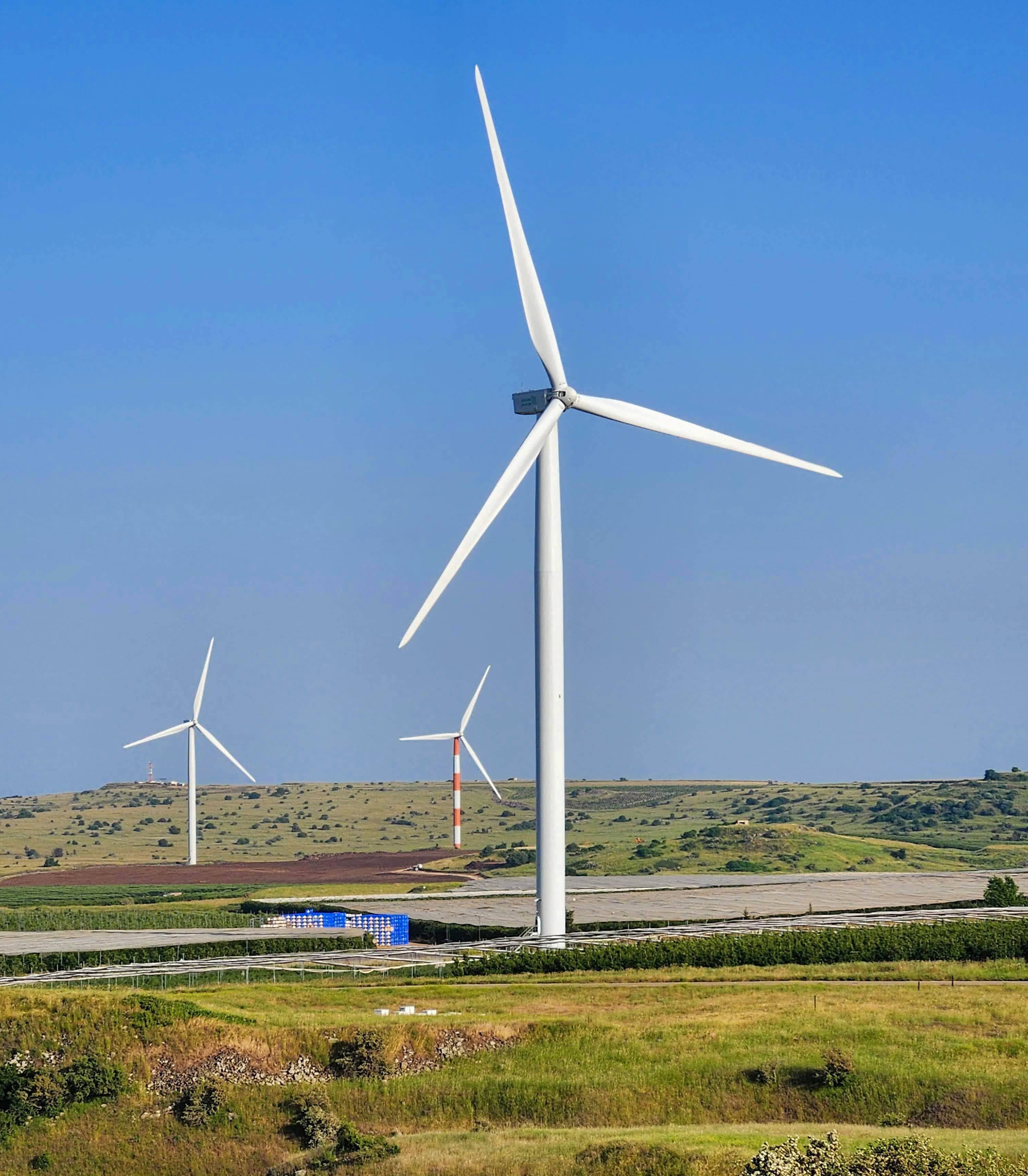
View the source ↗In June 2023 Syrian Druze residents of the occupied Golan protested the construction of wind turbines by the Israeli company Energix on or near cultivated land. The Syrian Center for Media and Freedom of Expression reported testimony from residents who said Israeli police blocked agricultural routes and used excessive force during the confrontation. Alkhalili, Dajani and Mahmoud document how wind projects in occupied territories can extend inequalities of land control and self-determination even while producing lower-carbon electricity. The dispute is not over whether wind power can be useful. It is over who controls the land, consents to infrastructure and receives its benefits.
 Archive image unavailable; follow its source below.
Bashar al-Assad’s government fell in December 2024. Syrians emerged from years of state repression, battles and displacement to find broken pumping stations, power lines, canals and houses. Repair depended on local workers, secure access, finance, imports and replacement equipment. Long-standing Western restrictions complicated trade and payment, even where humanitarian exemptions applied. So did the physical destruction of war and the legacy of Syrian state policy. Political change created an opening; it did not supply a functioning network.
The historical record can be read beside this chapter.
UN OCHA Syria ↗Documentary source · No event photograph claimedOn 28 May 2025, the European Union lifted most economic sanctions on Syria, while retaining security-based and targeted restrictions. US comprehensive Syria sanctions were revoked effective 1 July 2025, with sanctions on designated individuals and entities remaining. These dated decisions changed the legal terms of trade and reconstruction, but lifting restrictions did not immediately reopen supply chains or restore destroyed electrical and water infrastructure. The old regime of comprehensive sanctions cannot be described as continuing unchanged.
The historical record can be read beside this chapter.
EU Council: 28 May 2025 sanctions change ↗Documentary source · No event photograph claimedBy August 2026, the US Treasury recorded the end of comprehensive restrictions on Syria and the continuation of sanctions against specified actors. The EU likewise retained targeted measures linked to the former Assad regime. The distinction matters for reconstruction: a bank deciding whether to finance a pumping station, a supplier selling replacement equipment and a Syrian utility trying to restart a network face different conditions before and after the legal changes. Whether funds, materials and safe access actually reached a damaged facility remains a separate, documented question.
US Treasury / OFAC: changes through 24 August 2026. The linked source retains its own rights and context.
Inspect the original ↗Publisher-hosted reporting about farmers, the river and conflict.
View original ↗
External documentary footage. Follow the original upload for its producer, publication date and reporting context.
View original ↗Photographs, names and documentary records from the people and institutions who preserved this history.
Explore the original record ↗