Helmand / Afghanistan and Iran
Sistan wetlands, British frontier arbitration, dams and water claims.
← Choose another history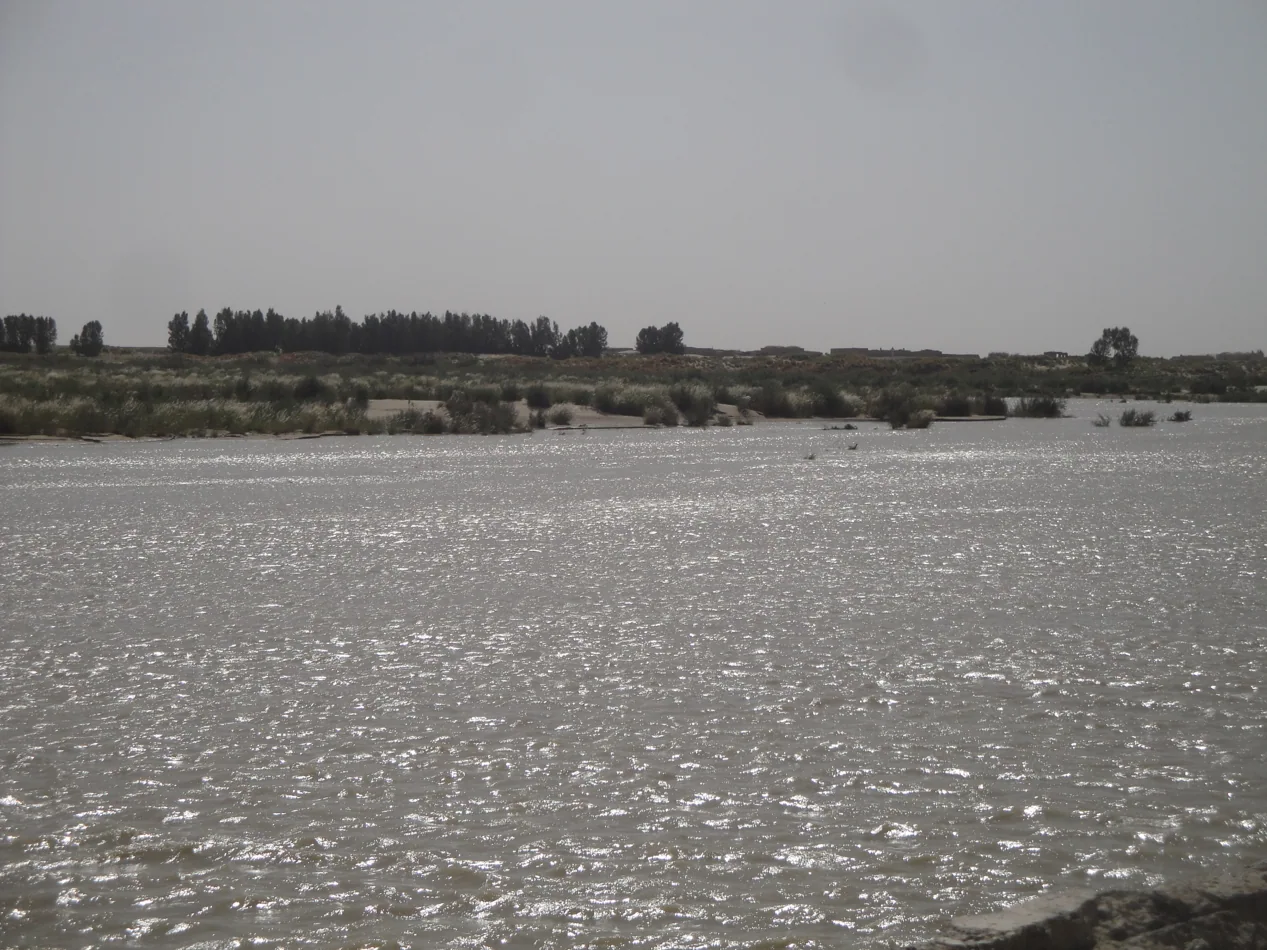 Archive image could not load; read the primary document linked beside this scene.
Zarang and the Helmand: a river world before its colonial boundary
Centuries before a British arbitrator drew a boundary or a US contractor designed a dam, the Helmand sustained the cities, orchards and canal lands of Sistan. Arabic and Persian geographers described the river passing Bost and flowing towards Zarang, where diversions and canals—including the Nahr al-Ṭaʿām—served agriculture and mills. Sistan’s Islamic-era rulers, cultivators and urban communities inherited older Iranian and Central Asian hydraulic practices and adapted them to a volatile river. A local historical account even records the lower Helmand drying in 835 and causing distress: scarcity was not a newly invented crisis. This history restores residents’ expertise without pretending that earlier kingdoms, canals or droughts were always benign. Modern water treaties sever a much older shared geography when they begin their story only with a state line.
Original scholarship, heritage record or community history. Follow the source for its historical context.
Read the record ↗Water reaches Sistan
Seasonal Helmand flows have sustained irrigation, wetlands and settlements on both sides of what became the Afghanistan–Iran border. They also change course and timing, affecting the lives of communities along the river.
Archive image could not load; read the primary document linked beside this scene.An imperial arbitration
British officer Frederic Goldsmid arbitrated a frontier dispute between Persia and Afghanistan in 1872. The settlement became part of a longer political history in which British strategic interests influenced the border region.
London mediated the river between two kingdoms
Britain’s Goldsmid arbitration in 1872 sought to settle a disputed border between Persia and Afghanistan near the Helmand. It was part of Britain’s wider imperial strategic contest in the region, rather than a locally initiated water-sharing process. Later dams and the 1973 Helmand Treaty developed within a river basin already shaped by earlier border decisions. Afghan and Iranian communities continued farming and living with the consequences of both hydrology and the boundaries negotiated over them.
Primary evidence: Research on Helmand: Decolonizing Water Diplomacy for Justice
View the source ↗A commission on the river
Henry McMahon’s British mission became another reference point in disputes over Helmand flows and Sistan. Border diplomacy sat alongside the seasonal practices of farmers and wetland communities.
A dam and a development programme
Afghanistan’s Helmand Valley development began as an Afghan state programme contracted to the US engineering company Morrison-Knudsen in 1945 and later backed by American technical and financial assistance. The Helmand Valley Authority was explicitly modelled on the US Tennessee Valley Authority; dams, canals and settlement schemes aimed to expand irrigated agriculture and reshape landholding and rural administration. Cotton-export ambitions and relocated farming households formed part of this Cold War development vision. It was not British formal colonial rule, but international development power and Afghan state-building together altered an existing river society. The projects yielded infrastructure while also creating land, salinity, drainage and governance problems that cannot be read from dam statistics alone.
The Helmand treaty
Iran and Afghanistan signed a water-sharing treaty in 1973. It followed decades of negotiation and foreign technical involvement. The treaty did not bring an end to disputes as governments, wars and droughts changed.
The US-led war reaches the Helmand basin
US-led military intervention in Afghanistan began in 2001 after the September 11 attacks. Decades of violence, displacement and failed or interrupted public services affected communities throughout the country, including the river basin.
Water and the border
Tensions between Afghanistan and Iran over Helmand water escalated, alongside long-term drought, dam operations and cross-border security disputes. Families downstream remained exposed to the consequences of both politics and hydrology.
The Helmand river
A short sequence from Mohsen Nagheeby’s teaching archive. The rights of individual photographs require separate confirmation before wider republication.