Indigenous rivers / North America
Celilo Falls, tribal fishing rights and water on First Nations reserves.
← Choose another historyWyam was a centre of knowledge and diplomacy before the dam
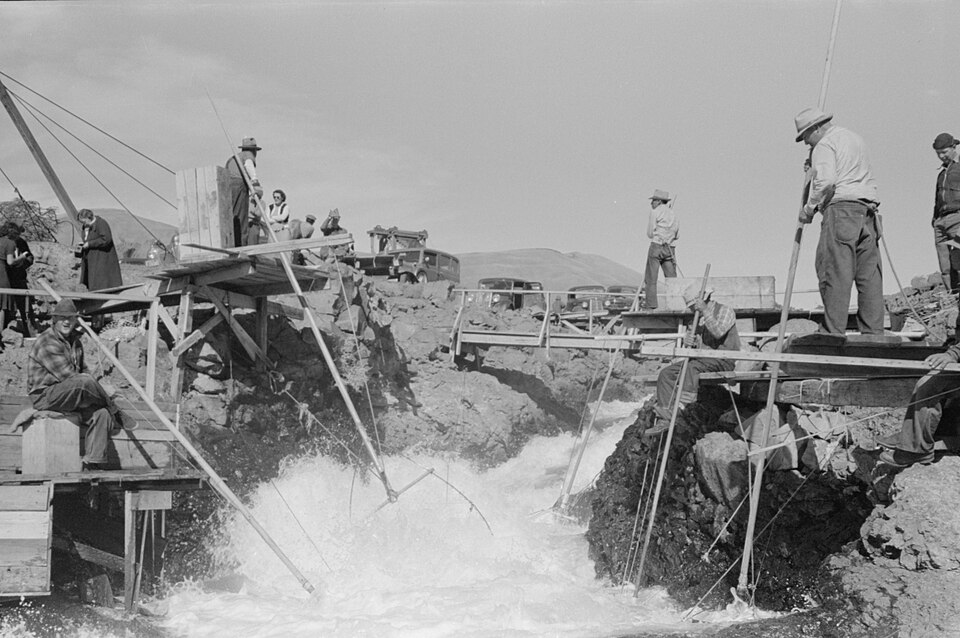
Long before a US Army engineer conceived The Dalles Dam, Celilo Falls—Wyam—was a meeting place for Columbia River peoples. For millennia, Native families developed specialised salmon harvesting, trade relationships, spiritual ceremonies and knowledge of seasonal currents. Communities from many Nations travelled to the falls; the river was both sustenance and a political and cultural connection. Later US treaties reserved fishing rights at traditional places, yet settlement, policing and dam building restricted the exercise of those rights. The reservoir submerged the falls in 1957, but the peoples and treaty claims did not disappear. Oral histories and Indigenous-authored teaching resources are essential here because engineering reports cannot tell us what the loss of Wyam meant to those whose lives were organised around it.
Original scholarship, heritage record or community history. Follow the source for its historical context.
Read the record ↗Before the federal dam
At Celilo Falls on the Columbia River, Indigenous families gathered for generations to fish salmon, trade and celebrate. The site held economic and spiritual meaning that survived colonisation and treaty-making.
Fishing rights in treaties
Treaties with the United States recognised tribal fishing rights at established locations. Settler commerce and dams increasingly disrupted the fishery even when the formal rights remained on paper.
The falls go underwater
In March 1957, the reservoir behind The Dalles Dam inundated Celilo Falls. Indigenous leaders opposed the dam and mourned the loss of a sacred fishing site. Compensation did not reproduce a river landscape, community gathering place or salmon run.
The day Celilo Falls went under water
On 10 March 1957, the gates of the US Army Corps of Engineers’ Dalles Dam closed and the rising Columbia River reservoir submerged Celilo Falls. For Indigenous fishing families the falls were not simply an economic resource. They were a gathering place and part of intergenerational law and ceremony. Yakama elder Russell Jim later recorded memories of dip-net fishing there. Native families protested the dam, and their descendants continue salmon fishing and ceremonies on the river despite the loss of the falls.
Original record: US National Library of Medicine: Celilo flooded, March 1957
View the source ↗A water advisory still in place
Canada’s own October 2026 government data listed 39 active long-term drinking-water advisories in First Nations public systems. The record is a measure of work still unfinished; it must be read alongside First Nations’ long struggle for authority and safe water infrastructure.
Indigenous-produced film, Stories from the River: Celilo
Photographs, names and documentary records from the people and institutions who preserved this history.
Explore the original record ↗