Congo / DR Congo
From violent extraction under colonial rule to batteries and forced evictions.
← Choose another history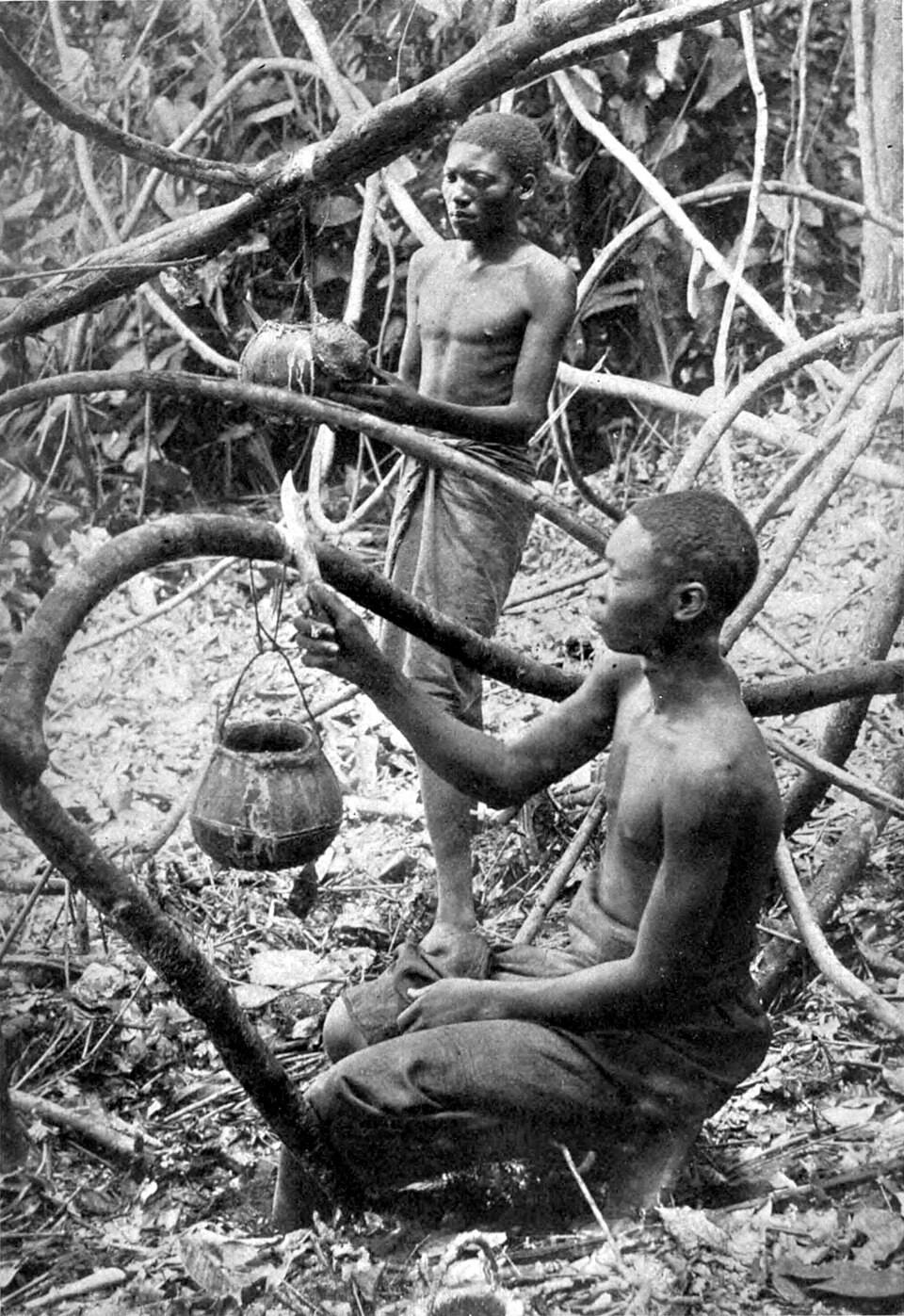
Congo’s minerals and wetlands had histories before Belgian extraction
In the Upemba Depression and the river systems of south-central Congo, communities developed agriculture, fishing, metalworking and commerce long before Belgium imposed its concessionary economy. Archaeological histories associate the Luba and Lunda kingdoms with the circulation of copper, iron and salt, as well as forms of political authority connected to fertile floodplains and mineral resources. These kingdoms included coercion and unfree labour; recognising indigenous civilisation is not the same as idealising its rulers. The later Belgian mining system reorganised extraction around metropolitan companies and rail export routes, while contemporary cobalt investors operate within further layers of law and finance. A long history of African mining knowledge makes the successive transformations of ownership and power easier to see.
Original scholarship, heritage record or community history. Follow the source for its historical context.
Read the record ↗Congo Free State
Leopold II of Belgium controlled the Congo Free State through a brutal colonial system of forced extraction, coercion and mass violence. Communities were subjected to hostage-taking, forced labour and punitive campaigns, with profound loss of life.
Belgian colonial rule
Belgium took over the Congo in 1908. Mining and infrastructure continued to be organised around extracting resources for global markets. Workers and families confronted racial inequality and restricted political rights under colonial administration.
Belgian colonial rule
The historical record can be read beside this chapter.
Britannica Congo Belgian colonialism ↗Documentary source · No event photograph claimedIndependence and foreign intervention
Independence from Belgium in June 1960 did not transfer the mineral economy onto an equal footing. Belgian authorities and Congolese political rivals helped remove Patrice Lumumba from office in 1960. Congolese authorities later transferred him to the secessionist Katanga regime, where his captors executed him in January 1961. A Belgian parliamentary inquiry later acknowledged Belgium’s moral responsibility for the circumstances of his killing. Colonial railways, mines and export routes had organised wealth around extraction. Later state ownership under Mobutu did not end corruption or external dependence. The 2002 mining-law reforms reopened this inherited sector to international capital under a different legal and financial order.

From colonial mine to investor-friendly mining code
In 2002 the Congolese government adopted a Mining Code negotiated alongside World Bank-supported economic recovery and sector reform. The IMF recorded changes designed to turn the state from mine operator into regulator, standardise mining rights and attract private investment. Bank-linked conditions included new mining-title institutions and the restructuring of the state enterprise Gécamines, including a worker-departure programme. Foreign capital did not create Congo’s extractive geography; it entered one shaped by Belgian colonial mining and subsequent state rule. The code helped organise a renewed wave of investment, while protection of residents depended on later licensing, regulation and company conduct.
Original policy, archival or research record. Inspect the source for its exact context.
Read the record ↗An expanding cobalt mine
In Kolwezi, expansion of industrial copper and cobalt mining displaced people from neighbourhoods, homes and farmland. This newest battery-mineral frontier rests on an older extractive geography formed under Belgian rule and reopened through post-2002 investment legislation and foreign company deals. Demand from global electronics and clean-energy supply chains brings revenue to investors and the state, but affected residents have reported lost water connections, land and affordable housing. The mining-law history explains the enabling conditions; each displacement still has its own responsible operator and state decisions to investigate.
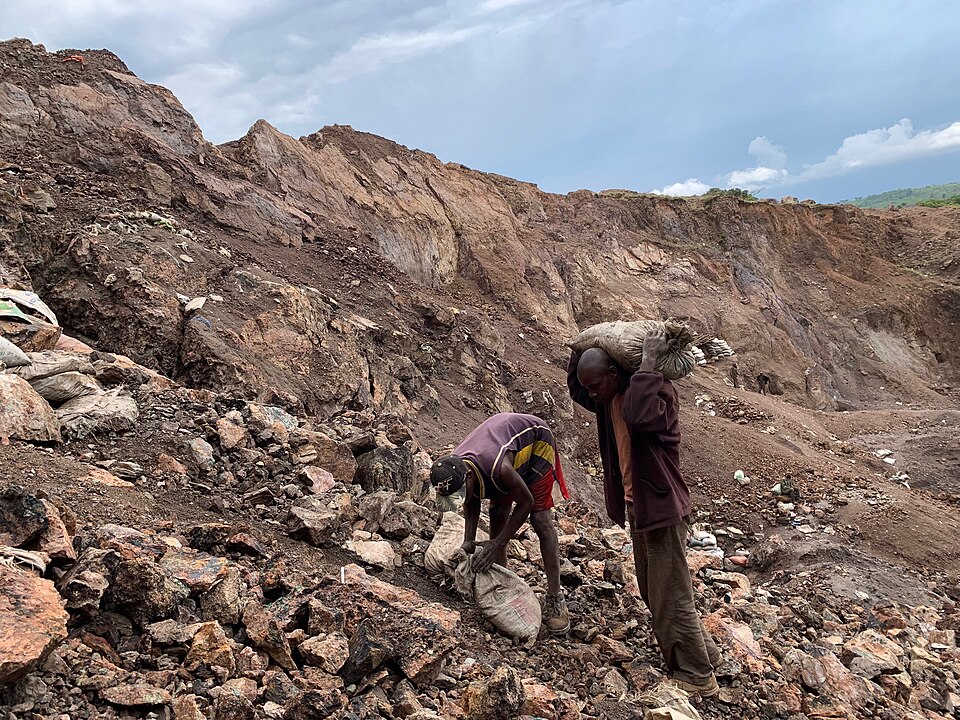
Edmond Musans was told there were minerals beneath his home
In Kolwezi, the expansion of a copper and cobalt mine meant that Edmond Musans had to dismantle his house and leave. The project was operated by a joint venture involving China’s Zijin Mining Group and Congo’s state mining company Gécamines. Researchers from Congolese organisation IBGDH and Amnesty International documented households moving from homes with running water and electricity to places where neither was reliable. Musans helped organise neighbours to seek fairer compensation. The batteries of the global energy transition begin with decisions made over actual homes and streets.
Original record: IBGDH and Amnesty: testimony of Edmond Musans
View the source ↗A home marked for the cobalt mine
Congolese residents of Kolwezi described mining expansion arriving not as a promise of clean energy but as marks on house walls and orders to leave. The Congolese organisation IBGDH and Amnesty International recorded families moved from homes with water and electricity to settlements without reliable services. Edmond Musans helped organise other residents to demand fair compensation. The companies involved include foreign and Congolese owners. The minerals travelled into international supply chains, while the costs stayed with neighbourhoods near the mine.
A home marked for the cobalt mine
The historical record can be read beside this chapter.
Amnesty full report ↗Documentary source · No event photograph claimedCongolese group IBGDH and Amnesty: cobalt and displacement
Photographs, names and documentary records from the people and institutions who preserved this history.
Explore the original record ↗