Libya
Omar Mukhtar, the Great Man-Made River, intervention and sabotaged pumps.
← Choose another historyGaramantes: underground water made a Saharan civilisation possible
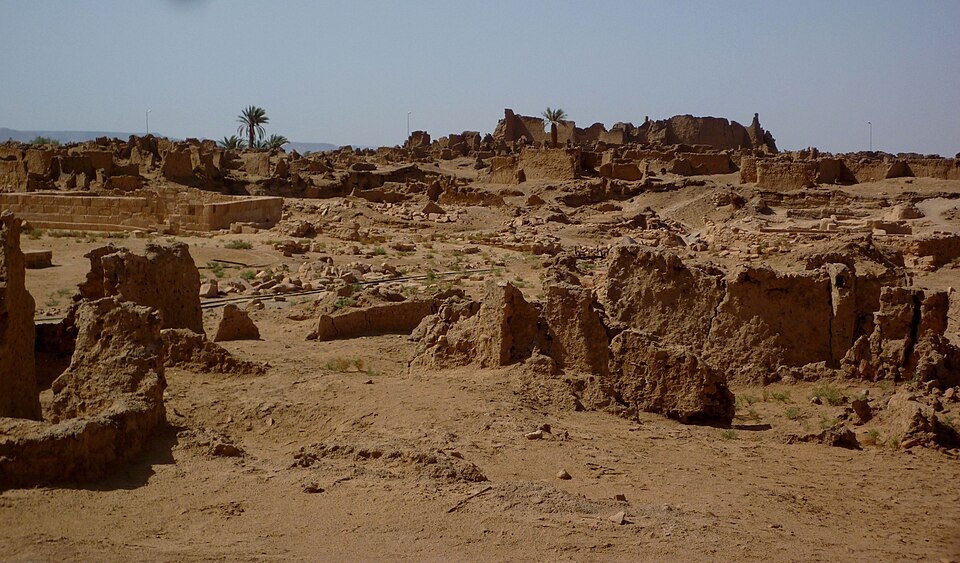
In the Fezzan oases, the Garamantes built a sophisticated agricultural society long before Italy conquered Libya. Archaeologists have documented extensive foggara galleries that carried groundwater through underground tunnels and shafts to cultivated land in Wadi al-Ajal. Plant remains at Jarma show winter and summer crops; the channels enabled an oasis economy linked to regional trade. The systems also extracted from aquifers that could decline, and the archaeology cannot fully reconstruct labour arrangements or inequality. Their existence puts the twentieth-century Great Man-Made River in historical perspective: Libyan desert inhabitants had long possessed serious hydraulic knowledge, even though the modern fossil-aquifer megaproject served very different scales of state power.
Archival image unavailable. Open the institutional record ↗
Italy invades Libya
Italy invaded Ottoman Libya in 1911. Colonial conquest met fierce local resistance; Italian repression included imprisonment, forced displacement and concentration camps in Cyrenaica in the decades that followed. Communities lost land and livelihoods.
Omar Mukhtar is executed
Omar Mukhtar organised resistance to Italian colonial rule in eastern Libya. Italian authorities captured and executed him in 1931. His story belongs to the people fighting occupation, not simply to the later nationalist iconography built around his image.

Pumping fossil water north
The Great Man-Made River project drew deep groundwater from Libya’s southern aquifers toward cities and agricultural projects in the north. Its huge pipes and pumps made urban water supply dependent on a vast, vulnerable network.
NATO intervenes; Libya’s water system enters years of war
In 2011, Britain, France and the United States were central to NATO’s air campaign against forces loyal to Muammar Gaddafi, launched under a UN civilian-protection mandate. Libyans had risen against his government; their demands and views of foreign intervention were not uniform. The intervention helped overthrow the government, but no stable political settlement followed. Rival armed groups fought for territory while the country’s Great Man-Made River, supplying water across the desert, became vulnerable to shutdowns and attacks. Libya’s residents had to negotiate for water amid the collapse of central authority.
A control room closes the taps
On 19 May 2019, a water-control station connected to the Great Man-Made River was shut down, cutting supply to Tripoli and other cities. The UN condemned the act, warning of harm to hundreds of thousands of civilians. Armed groups and conflict made the water network a means of coercion.
Someone shut the river off
On 19 May 2019, a water-control station at Jabal al-Hasawna in southwestern Libya was deliberately shut down. Tripoli and other towns lost supply from the Great Man-Made River, the vast groundwater pipeline built before the 2011 war. The UN reported that 96 of the system’s 366 wells were already out of service as a result of sabotage. After Italy’s colonial invasion and later NATO intervention in 2011, Libyan communities were again living with decisions about water being imposed by armed power. The particular 2019 sabotage was carried out by local actors, not by NATO.
Primary evidence: UN mission: water shutoff and numbers, May 2019
View the source ↗