Libya · 1911–1931
Omar Mukhtar
Led resistance to Italian colonial rule in Cyrenaica. Captured and executed by Italy in 1931.
Historical source ↗These are not interchangeable heroes. Some organised against foreign rule, some built farms and water systems, some defended access to land. Their ideas, methods and later political records differ. Click their sources to examine each history.
Led resistance to Italian colonial rule in Cyrenaica. Captured and executed by Italy in 1931.
Historical source ↗Palestinian political figure who founded agricultural and vocational work for displaced Palestinians near Jericho.
Historical source ↗Reformist thinker associated with anti-imperial political argument across the Muslim world; his origin and political programme remain debated.
Historical source ↗Led major campaigns of nonviolent civil disobedience against British rule; his politics and social views are studied critically today.
Historical source ↗A leading anti-colonial organiser and Ghana’s first prime minister, later president, who argued that nominal sovereignty did not necessarily end external economic control.
Historical source ↗Organised independence struggles against Portuguese colonial rule and wrote about agriculture, culture and the political conditions of liberation.
Historical source ↗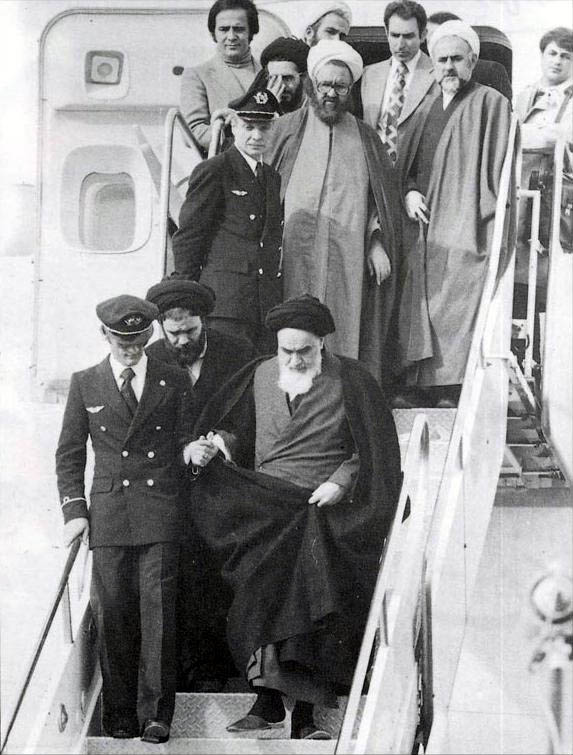
After fifteen years of exile, Khomeini returned to Iran on 1 February 1979 and became the leading figure of a revolution that opposed the US-backed shah and foreign influence. Its broad coalition included secular and leftist groups. His subsequent Islamic Republic suppressed political opposition and imposed restrictions on civil freedoms.
Historical source ↗The Iranian Revolution, 1979 ↗Photo: Sajed.ir / Wikimedia Commons, GFDL ↗Image licence ↗Tribal communities defended treaty fishing rights and cultural connections to the river before and after The Dalles Dam inundated Celilo Falls.
Historical source ↗Farmers, neighbourhood groups, unions and other citizens organised against privatised water services and secured an end to the concession.
Historical source ↗Residents of Kolwezi formed committees to oppose inadequate compensation and displacement as copper and cobalt mining expanded.
Historical source ↗Independence leader and host of the 1955 Bandung conference; called for Afro-Asian solidarity against continuing colonial domination.
Primary story ↗Indonesian survivor who confronted people implicated in his brother’s murder; his testimony is central to the film The Look of Silence.
Primary story ↗Cooperative water associations that continue to allocate irrigation water through locally maintained canals and water temples.
Primary story ↗
In Peter Brook’s 1968 film Tell Me Lies, Kwame Ture distinguishes the absence of conflict from liberation. The film opens another part of the history of anti-colonial struggle.
View original ↗