Iran: Sovereignty, Sanctions, War & the People Who Lived It
Oil nationalisation. An Anglo-American coup. Revolution. Iraq’s invasion and chemical attacks. Then the long reach of US financial sanctions into pharmacies, hospitals, factories and the daily lives of Iranian families.
← Choose another history
The buried river: Persian qanats and al-Karajī’s groundwater science
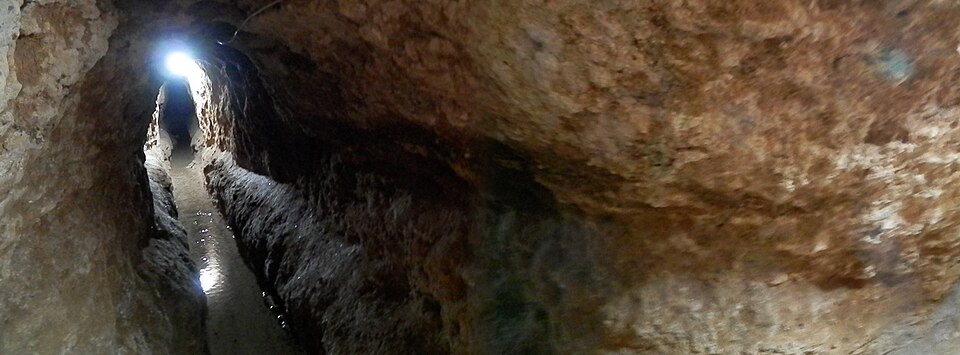
Centuries before the twentieth-century dam, engineers in the Iranian plateau had learned to lead groundwater downhill through gently sloping underground qanat tunnels. Skilled diggers, surveyors and farmers maintained shafts, reservoirs and time-based shares of flow; the technology long predates Islam and continued to develop across successive Iranian and Islamic societies. Around 1017, the Persian mathematician al-Karajī wrote Kitāb Inbāṭ al-Miyāh al-Khafiyya, a technical study of locating and extracting hidden water, in Arabic—the scholarly language of much of the medieval Islamic world. This was not merely folklore awaiting European hydrology: it combined observation, geometry and practical surveying. Qanat systems also reflected property and labour relations; they were not automatically egalitarian. Yet their enduring knowledge and community management complicate the idea that modern water expertise arrived in Iran from outside.
Archival image unavailable. Open the institutional record ↗
The oil industry nationalised
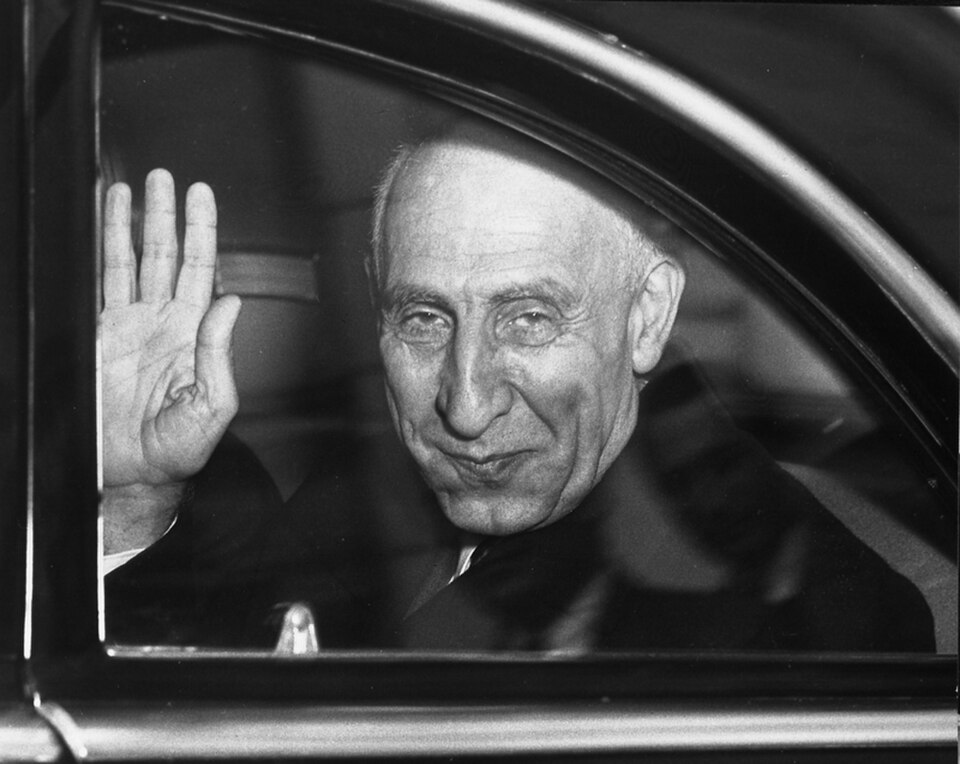
Prime Minister Mohammad Mosaddegh moved to nationalise the Anglo-Iranian Oil Company in 1951, challenging the British position in Iran’s economy. The crisis was about oil, sovereignty and the right to decide how national resources would be used. Rivers and irrigation were already affected by state development projects and political decisions, but the oil confrontation made the wider struggle over foreign control unmistakable.
A coup backed from abroad
In August 1953, British and American intelligence backed a coup that removed Mosaddegh and restored the shah’s position. The UK Parliament later acknowledged both governments’ roles. The shah’s rule expanded state security powers, industrial development and irrigation investment while curtailing organised political opposition. The memory of foreign intervention remained central to Iranian political life.
The Helmand agreement
Iran and Afghanistan signed the Helmand River treaty in March 1973 after decades of border negotiation. Farmers, villages and the Sistan wetlands depended on seasonal flows that the treaty sought to allocate. Behind the legal text lay earlier British frontier arbitrations and US-assisted engineering in the Helmand valley.
The Helmand agreement
The historical record can be read beside this chapter.
Follow Helmand ↗Documentary source · No event photograph claimedA revolution against monarchy and foreign domination
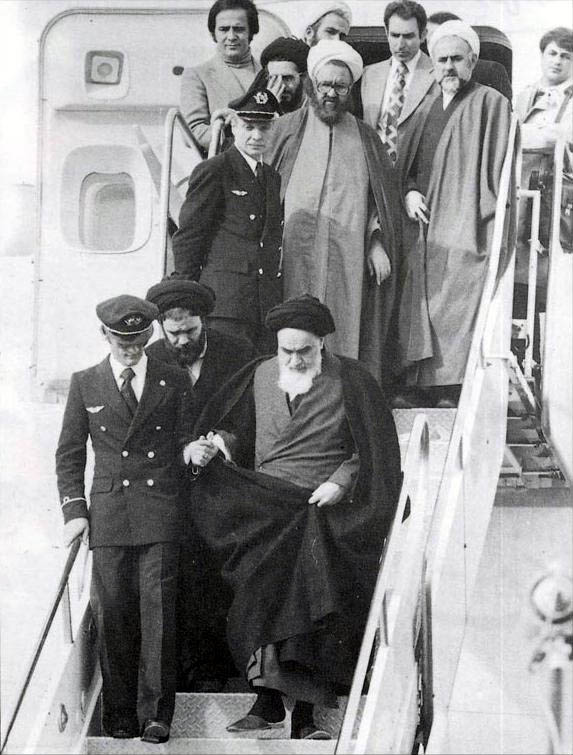
Millions of Iranians mobilised against a monarchy closely allied with the United States. The overthrow of Mosaddegh in the British–American-backed coup of 1953 remained part of the movement’s political memory. Ayatollah Ruhollah Khomeini returned from exile on 1 February 1979 and became a central figure of the new Islamic Republic. The revolution brought together diverse organisations and currents that did not agree on Iran’s future. For its supporters, breaking foreign control and defending independence were defining aims; debates over power, representation and justice continued after the monarchy fell.
Iraq invaded; Iran faced chemical warfare
On 22 September 1980, Saddam Hussein’s Iraq launched a full-scale invasion of Iran. For eight years, families along the border endured displacement, bombings and damaged farmland and waterways. Iraq repeatedly used chemical weapons; UN investigators confirmed their use. From 1982, the United States increasingly supported Baghdad through intelligence, commercial and diplomatic channels, even as US officials received evidence of Iraqi chemical attacks. The gas reached soldiers and civilians. Its effects outlasted the ceasefire.
Iraq invaded; Iran faced chemical warfare
The historical record can be read beside this chapter.
UN chemical-weapons investigations ↗Documentary source · No event photograph claimedWashington knew Iraq was using chemical weapons
A US State Department memorandum dated 1 November 1983 reported that Iraq was using chemical weapons with increasing frequency. Declassified records show that Washington moved towards closer relations with Baghdad rather than ending support. For Iranians exposed to mustard gas and other agents, this was not an abstract Cold War calculation. It shaped their bodies, families and medical needs for decades.
A November 1983 US government memorandum on Iraqi chemical attacks.
Read the original record ↗Washington leaves the nuclear deal. Sanctions return.
In May 2018 the United States withdrew from the international nuclear agreement and restored sweeping sanctions. The restrictions hit trade, banking, shipping and access to foreign exchange. Families saw the price of essential goods rise, while businesses and hospitals struggled to pay overseas suppliers. Medicines were formally exempt, but an exemption on paper could not compel a foreign bank to process a payment.
2018: the decision to reimpose US financial sanctions affected transactions far beyond the United States.
Read the original record ↗The medicines were exempt. Payments could still fail.
After Washington withdrew from the nuclear agreement, US sanctions and their secondary effects made international payments, shipping and pharmaceutical procurement more difficult. Medicine was nominally exempt, but Iranian patients and clinicians still reported shortages and rising costs. The restrictions met local distribution and insurance problems, leaving families to seek treatment through a fragile supply chain. Interviews conducted by Iranian researchers later recorded these experiences directly.
Read interviews with patients and healthcare workers, rather than treating sanctions as a change in a financial index.
Read the original record ↗Inside the hospitals, the costs were already visible.
A study published in 2024 drew on interviews with 31 people living with chronic or rare diseases in Iran, alongside health-policy interviews. Patients described travelling farther for prescribed medicine, paying more, and worrying that treatment would be delayed. The accounts came from Tehran, Sistan and Baluchistan, Hamedan and Yazd. They do not turn every shortage into a single-cause story. They show what happens when sanctions, fragile payment channels, household budgets and the health system meet at the pharmacy counter.
“I used to be able to just go to a pharmacy near my home and get my medication…”Anonymous patient with haemophilia, interviewed by Iranian researchers; published 2024.

Sanctions also reached the environment
Iran’s environmental pressures did not begin with sanctions. But restrictions on technology, international finance and access to equipment made some responses harder. A study of Iranian industrial subsectors later found that sanctions were associated with significantly lower energy efficiency, especially where industries depended on imported inputs. Older machinery and delayed efficiency improvements also have consequences for fuel consumption and pollution. The study does not attribute all Iranian environmental harm to sanctions.
An environmental assessment of technology, finance and resource-intensive responses to prolonged sanctions.
Read the original record ↗
Delayed scans. Missing treatments. Families deciding what they could afford.
Researchers based at Tehran University of Medical Sciences interviewed clinicians and people involved in cancer care. They described difficulty obtaining equipment and medicines, interrupted diagnostic pathways, and treatment delays. A separate Iranian-led national study found patients reporting reduced affordability and medicine availability, while its statistical analysis did not establish a consistent sanctions effect across every population-health indicator. The lived consequences were specific: appointments postponed, prescriptions changed, treatment costs transferred to households.
The United States and Israel opened a new war against Iran.
On Saturday morning, 28 February 2026, US and Israeli forces began coordinated strikes across Iran. Washington and Tel Aviv described their targets as military and political. Iranian families, however, lived in the cities and towns beneath the aircraft and missiles. The war began while children were in school.
The strikes reached communities near the Strait of Hormuz, where the world’s shipping and military routes meet ordinary Iranian towns. Minab, in Hormozgan province, would become the name many families could never forget.
US missiles struck a school full of children.
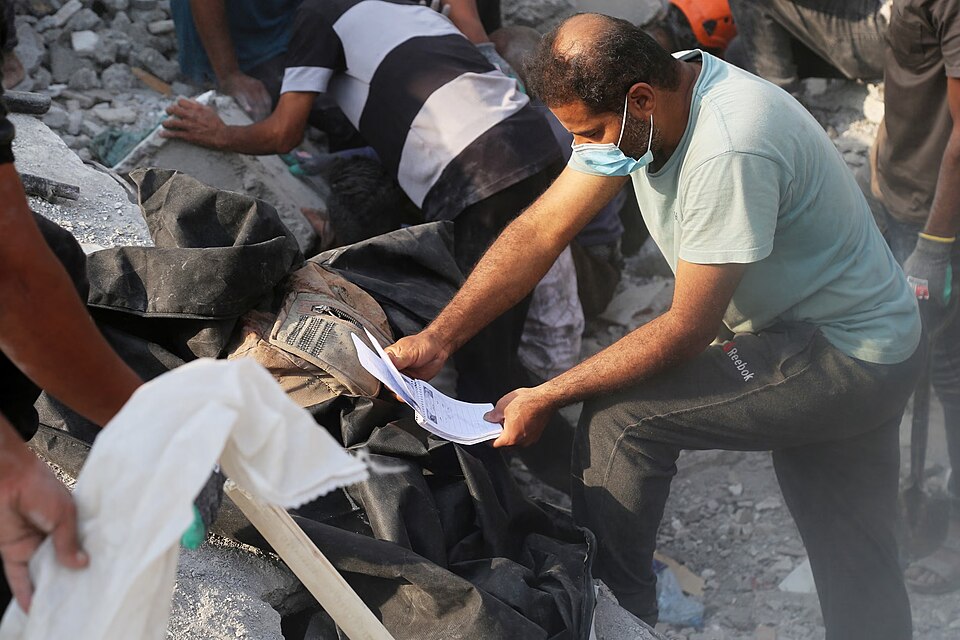
Shajareh Tayyebeh was a primary school in Minab. Its classrooms served girls and boys, many aged six to thirteen. On the first morning of the US–Israeli war, US forces struck the school with cruise missiles while children and teachers were inside. US strikes also hit buildings in the adjoining military compound. The school roof collapsed, burying children and adults.
The September UN fact-finding mission reported that the US attack killed 157 people, including 123 children. It found reasonable grounds to believe that the United States attacked a clearly identifiable civilian school, amounting to a war crime. Amnesty International had reported 156 deaths, including 120 children, in its earlier March investigation; the sources record different totals.
Associated Press reporters later met the families at the ruins. Heydar Sadeghi mourned his grandson Hami and daughter-in-law while caring for his surviving granddaughter Nila. Teacher Nasim Neyestani had tried to get her class to safety. This was a school with children, families and teachers — not an abstract entry in an air-war casualty table.
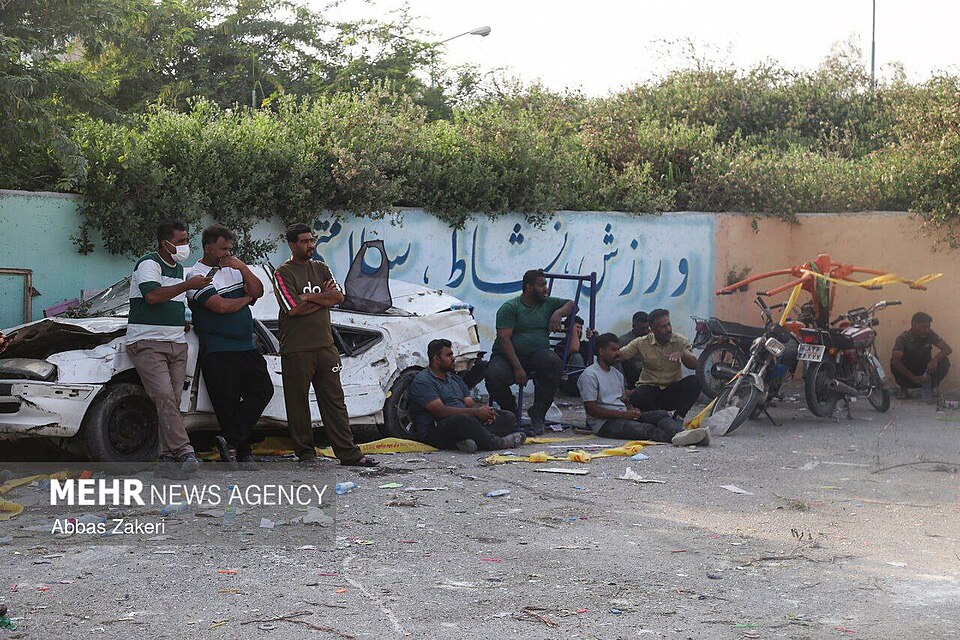
including 123 children, according to the mission’s investigation. Other official counts vary.
An airstrike cut water to villages on Qeshm Island.
Qeshm lies in the Persian Gulf, south of Minab. Many villages depend on desalination to turn seawater into water they can drink and use at home. A strike on 7 March damaged an island desalination plant.
The United Nations reported that more than 25 villages lost their water supply. The damage was not measured only at the plant: it reached kitchens, health needs and the daily work of collecting enough water.
Israeli strikes on fuel depots turned the rain black.
On 7 March, Israel attacked oil-storage facilities around Tehran and nearby Karaj. Fires burned through the night, covering neighbourhoods in heavy smoke. When rain fell, it carried soot and other pollutants back down onto streets, roofs and soil.
United Nations environmental specialists warned that such fires can send toxic pollution into surface water, groundwater and crops. Kaveh Madani and colleagues later described how the fallout of these strikes could outlast the fighting. This is another way war enters a family’s life: through the air they breathe and the water falling on their home.

NOAA satellite imagery recorded the fires at Tehran’s oil facilities. Public-domain imagery from the US National Oceanic and Atmospheric Administration.
View original satellite film ↗An aid shipment had been arranged. It never arrived.
In July 2026, Maryam Shirinsokhan interviewed Amin Afshar of the Iranian Hemophilia Society. Afshar said international suppliers, banks, insurers and transport firms were reluctant to handle shipments under sanctions, and described a proposed humanitarian donation that failed to reach Iranian patients after approvals were not obtained. He estimated that roughly 4,000 people faced the most severe shortages of specialised clotting treatments. These are the Society’s reported experiences, not independently audited national totals. Afshar also identified domestic bureaucracy and funding delays as further obstacles.
“The problem was by no means limited only to the sale of medications.”Interview conducted 29 July 2026; published 24 August 2026.
Investigators named the attack on Minab.
Investigators appointed by the United Nations Human Rights Council examined satellite images, the layout of the school and evidence of the strikes. They found reasonable grounds to believe that US forces hit Shajareh Tayyebeh school and that this amounted to a war crime. The finding is not a criminal-court judgment; no published Pentagon final report has provided an equivalent public accounting.
The school had been separated from the adjacent military compound by a wall for years. Children were taught there. Their families were still returning to the ruins months later. The UN investigators asked for accountability for the attack.