Iraq / Tigris and Euphrates
Imperial rule, sanctions, invasion and the collapse of water services.
← Choose another history Archive image could not load; read the primary document linked beside this scene.
Baghdad’s water flowed through Sasanian and Abbasid knowledge
When al-Manṣūr founded Baghdad in 762, he chose land already threaded with settlements and waterways. Sasanian-era canals connected the Euphrates with the Tigris; Abbasid planners extended and redirected water through new channels and conduits to the Round City, markets, gardens and workshops. The ninth-century geographer al-Yaʿqūbī described drinking-water channels and cisterns. Water carriers supplied households beyond formal conduits, while access depended on location and status. Modern historians reconstruct this network cautiously from texts because much of the archaeology has disappeared. The achievement was neither purely Sasanian nor purely Abbasid; engineers and labourers transformed an inherited hydraulic landscape. Later colonial and military accounts of Mesopotamia often begin with imperial campaigns, as if no such institutions or capacities preceded them.
Original scholarship, heritage record or community history. Follow the source for its historical context.
Read the record ↗A river civilisation under Ottoman rule
Baghdad and Basra were linked by the Tigris, Euphrates and the canals between them. Land, water and flood management were shaped by local communities and Ottoman administration long before the modern Iraqi state.
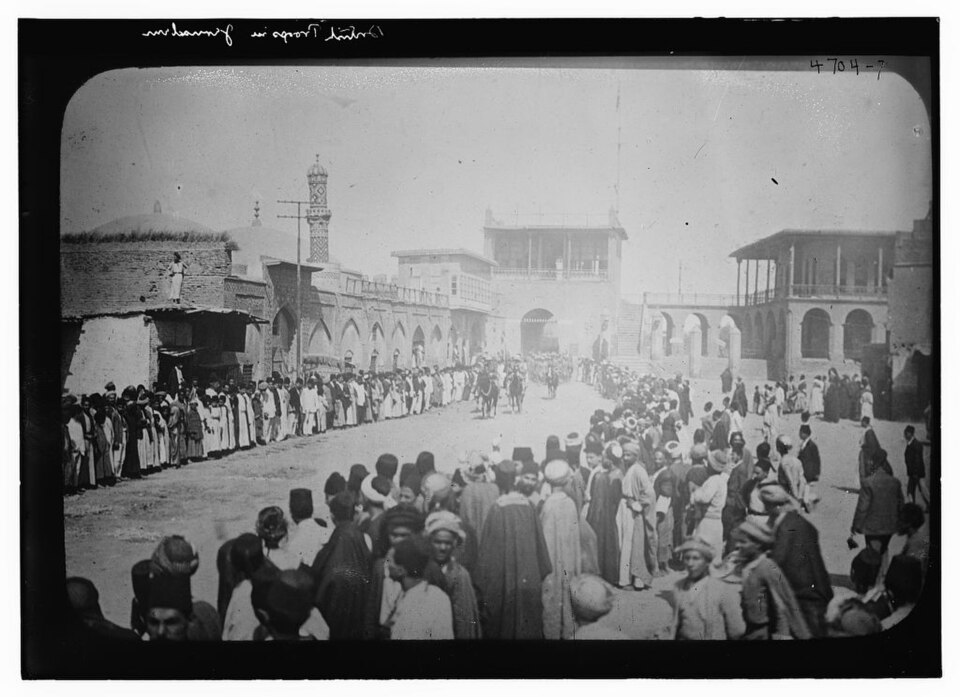
Archive image could not load; read the primary document linked beside this scene.British forces reach Baghdad
British troops took Baghdad in March 1917 during the First World War. Britain later governed Iraq under a Mandate, while Iraqis resisted colonial rule, including in the 1920 revolt. Control over river transport and the region’s political economy was part of the struggle.
The Gulf War, then a decade of sanctions
Following Iraq’s invasion of Kuwait, US-led forces bombed Iraqi infrastructure during the 1991 Gulf War. US-led bombing damaged electricity and industrial facilities. The UN sanctions that followed restricted imports and made repair of water treatment, power and sewage systems far harder. A US government audit later recorded that access to safe water and sanitation fell during the years between 1991 and 2003. Baghdad’s water pipes did not fail by themselves; war, sanctions, state mismanagement and failing maintenance all played a part.
The Gulf War, then a decade of sanctions
The historical record can be read beside this chapter.
UNEP: damage to Iraq’s environmental infrastructure ↗Documentary source · No event photograph claimedWhen the power plants went down, the water stopped
Iraq had built extensive water and electricity systems before the 1991 Gulf War. Coalition bombing damaged generating capacity, and treatment plants could no longer function reliably. A medical team visiting after the war described households collecting water from broken pipes and hospitals without safe running water. Sanctions then obstructed the import of equipment needed to restore the networks. A 2005 report by the US Government Accountability Office confirmed the cumulative impact of war damage, sanctions and maintenance failures.
Primary evidence: New England Journal of Medicine: field investigation, 1991
View the source ↗The United States and Britain invade Iraq
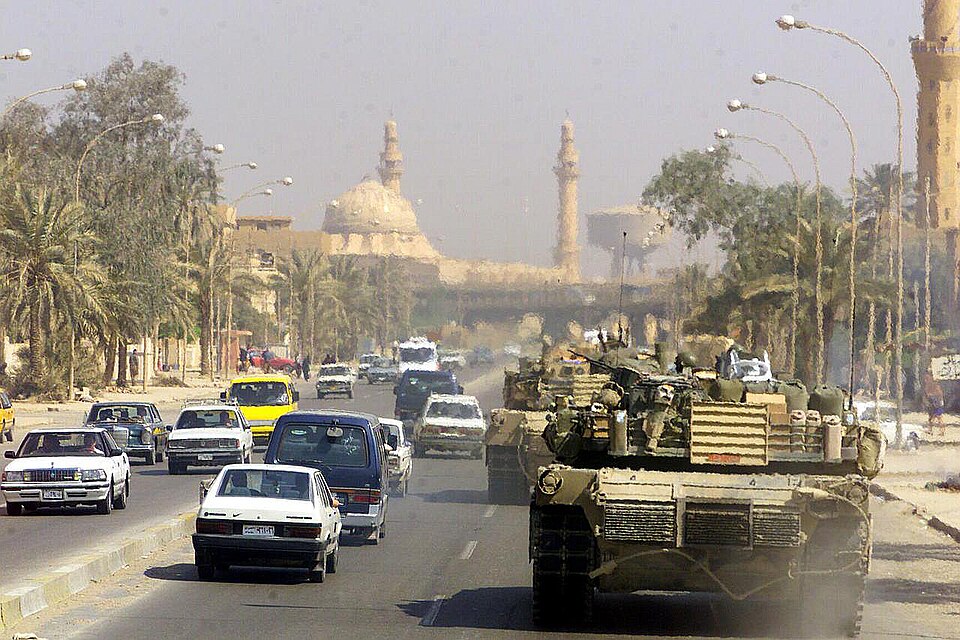
On 20 March 2003, the United States and Britain led an invasion of Iraq. Electricity failures, bomb damage, looting and insecurity compounded the collapse of essential water and sewerage services. Iraqi households faced contaminated supply and overflowing waste. In 2016 Britain’s own Iraq Inquiry found that military action was taken before peaceful options had been exhausted and that the threat had been presented with unjustified certainty. Iraqi families lived with the consequences of choices made in Washington and London.
ISIS takes territory and water works
ISIS seized large areas of Iraq, including strategic dams and infrastructure. Battles to retake cities displaced civilians and strained water supply systems. Iraqis endured both ISIS violence and the destruction associated with the subsequent fighting.
ISIS takes territory and water works
The historical record can be read beside this chapter.
Iraq OCHA archive ↗Documentary source · No event photograph claimed