The river
has witnesses.

A permit can tell us who authorised a pipe. It cannot tell us what a place means to those who live there. We need both documentary rigour and ways of listening that exceed the file.

Witnessing is not
the same as proof.

This collection asks how artistic expression, local memory and documentary evidence can illuminate one another while retaining their different meanings and evidentiary limits.

We will not invent community testimony, treat an artwork as an eyewitness report, or imply that an institutional document speaks for every affected person.

Hebron,
August–September 2022.

The original research pilot reports work interruption and renegotiation around the Hebron wastewater project. What becomes visible when we change the question?

The perspectives synthesise documentary sources; they are not interviews or words attributed to people we have not interviewed. The linked records can be inspected, and their source audit remains in progress.

Images that refuse
to stay silent.

Art does not merely illustrate our concepts. It can challenge a theory, disturb an official narrative and preserve a relationship to land that cannot be reduced to a property title.

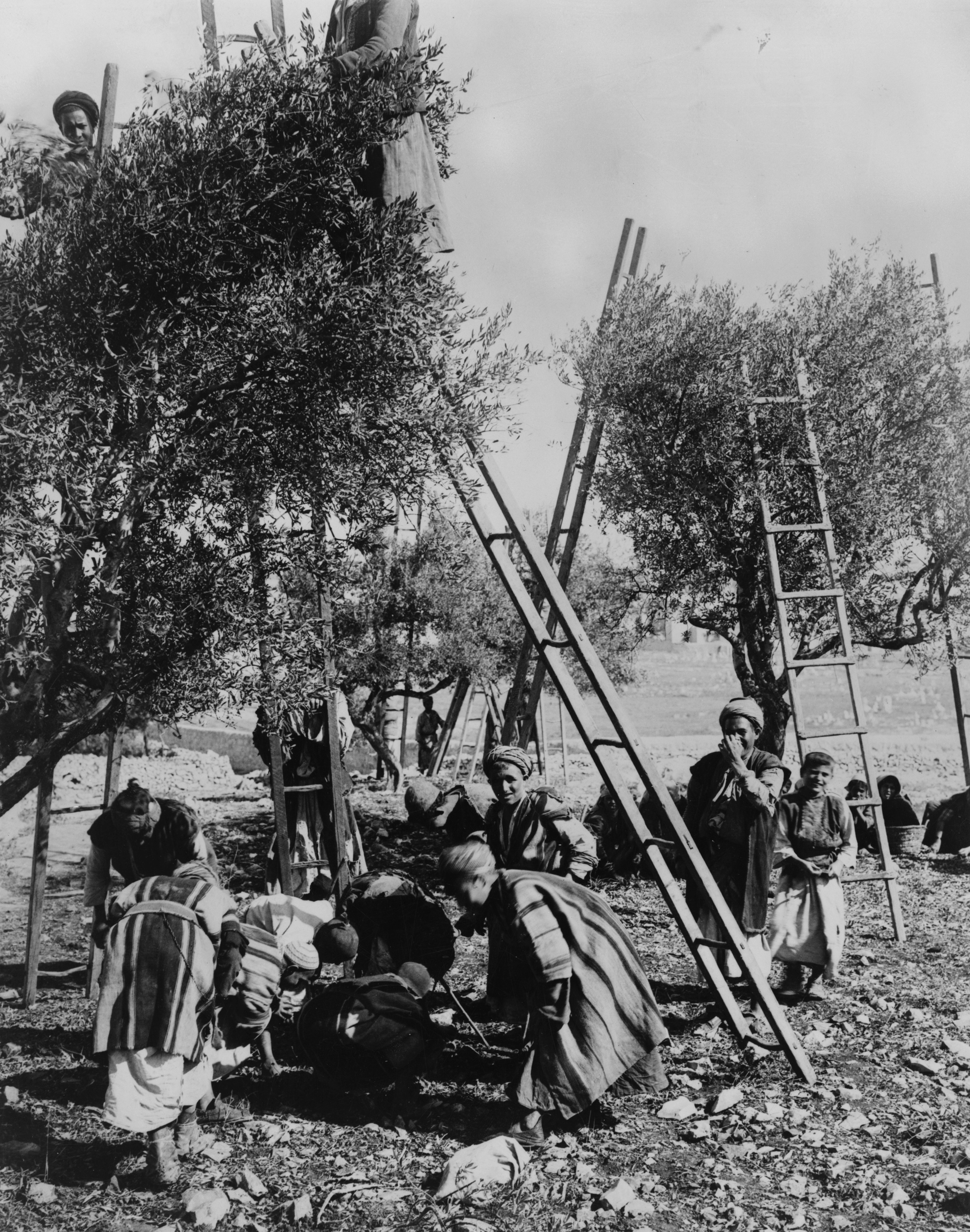
Palestinian families harvesting olives, historical photograph dated between 1880 and 1922
PALESTINIAN OLIVE HARVEST · c. 1880–1922Library of Congress · public domain ↗
ART / LAND / BELONGING

Sliman Mansour and the olive tree

For Palestinian artist Sliman Mansour, the olive tree evokes cultivation, rootedness and a homeland repeatedly subjected to dispossession. His paintings challenge the reduction of land to a commodity or a parcel on a map. The historical olive-harvest photograph above documents Palestinian agricultural life; it is not a Mansour painting. Follow the artist’s own archive to encounter his works in their original context.

Explore the artist's works ↗
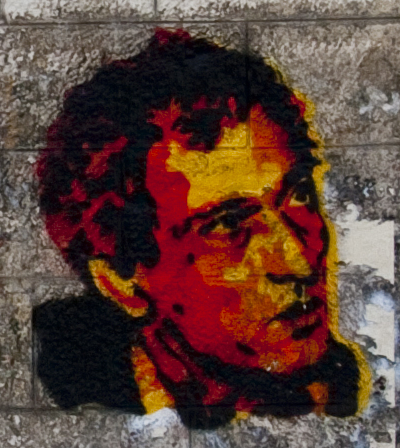
A commemorative mural portrait of Palestinian cartoonist Naji al-Ali in Ramallah, photographed in 2012
RAMALLAH · 2012Amer Shomali · CC BY-SA 3.0 ↗
CARTOON / POLITICAL MEMORY

Naji al-Ali and Handala

Palestinian cartoonist Naji al-Ali made Handala a lasting figure of exile, political refusal and the insistence on return. The 2012 Ramallah mural photographed above remembers the artist, not one of his cartoons. A history of the image must also ask who expelled Palestinians, how their dispossession was sustained, and why this small figure remains a witness across generations. We link to the drawings’ historical context rather than reproduce the copyrighted cartoons.

Explore the historical reference ↗
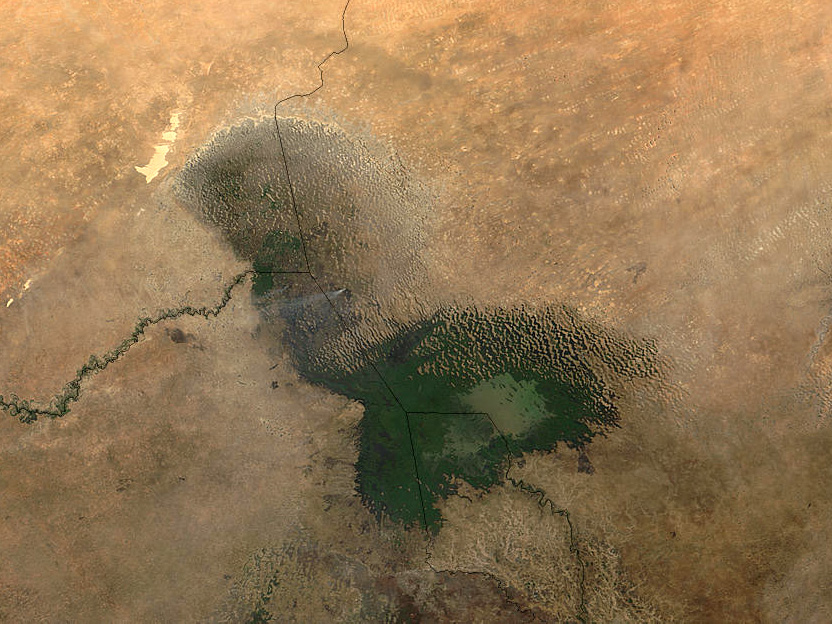
NASA satellite view of Lake Chad and surrounding landscape in September 2015
LAKE CHAD · 2015NASA · public domain ↗
ECOLOGY / TIME / STORY

Environmental harm and slow memory

Slow environmental violence has political histories. Colonial cash-crop economies, large irrigation projects, extraction and the disproportionate emissions of wealthy countries can distribute benefits and ecological harms across borders and decades. A NASA satellite view of Lake Chad, shown above, records one changing waterscape; the image alone cannot identify every cause. That requires tracing the decisions, water withdrawals, climate pressures and unequal livelihoods behind what is too easily called “natural scarcity”.

Read about slow violence ↗

When reaching
water meant danger.

A riverbank is not automatically a sanctuary. Name the armies, militias and firing positions; name the people they exposed to harm. Read each account for what its evidence can actually establish.

OMDURMAN · 2 SEPTEMBER 1898

The Nile after conquest

At Omdurman, near the Blue and White Nile confluence, Kitchener’s British-led Anglo-Egyptian army killed approximately 10,000 Mahdist fighters and wounded another 13,000. Modern rifles and Maxim guns enabled the crushing defeat that preceded Britain’s colonial administration of Sudan. Mark Zeitoun calls attention to this violence in his account of water and warfare.

TEL AL-ZAATAR · 1976 / REMEMBERED IN 1982

Women at a broken pipe

Lebanese right-wing militias besieged the Palestinian refugee camp of Tel al-Zaatar in 1976. Mahmoud Darwish remembered women seeking water at a broken pipe as targets of men hunting them “as if hunting thirsty gazelles.” His Memory for Forgetfulness is a literary witness to the violence, and should be read as such: its language gives human presence to a history too easily reduced to siege statistics.

SARAJEVO · 11 JULY 1993

Munira Zametica went for water

Munira Zametica, 48, went to collect water from the Dobrinja River. A sniper fired as she stepped beyond the protection of a bridge; others could not reach her under continuing gunfire. She died from her wound. The UN war-crimes tribunal found that the shot came from a known Sarajevo-Romanija Corps position under Bosnian Serb control. This was not simply a death “during the siege”: the court found a deliberate attack on a civilian fetching water.

Why the distinctions matter: a museum casualty estimate, a poet’s recollection and a criminal judgment are different forms of evidence. Each can sharpen historical understanding without pretending to be interchangeable.